
AC Leaking Water? Causes and When to Call a Pro
If your air conditioner is leaking water, it’s often due to issues like a clogged drain line, frozen evaporator coils, or a damaged drain pan. These problems can lead to water pooling near your unit, dripping vents, or even damage to your home. Addressing the issue quickly can save you from repair costs ranging from $200 to $1,600.
Here’s a quick overview of common causes and solutions:
- Clogged Drain Line: Algae, mold, or debris can block the condensate pipe, causing water to back up.
- Frozen Coils: Often caused by dirty filters or low refrigerant levels, melting ice can overwhelm the drain pan.
- Cracked Drain Pan: Older systems may develop rust or cracks, leading to leaks.
- Faulty Installation or Components: Improper leveling or a failing condensate pump can disrupt drainage.
Prevention Tips:
- Replace air filters every 30–90 days.
- Flush the drain line with vinegar every 3–6 months.
- Schedule professional maintenance annually (or twice a year in humid areas).
If leaks persist or involve refrigerant or mechanical issues, turn off your AC and call a professional to avoid further damage. For Florida residents, companies like West Florida Air offer 24/7 services and financing options to address these issues effectively.
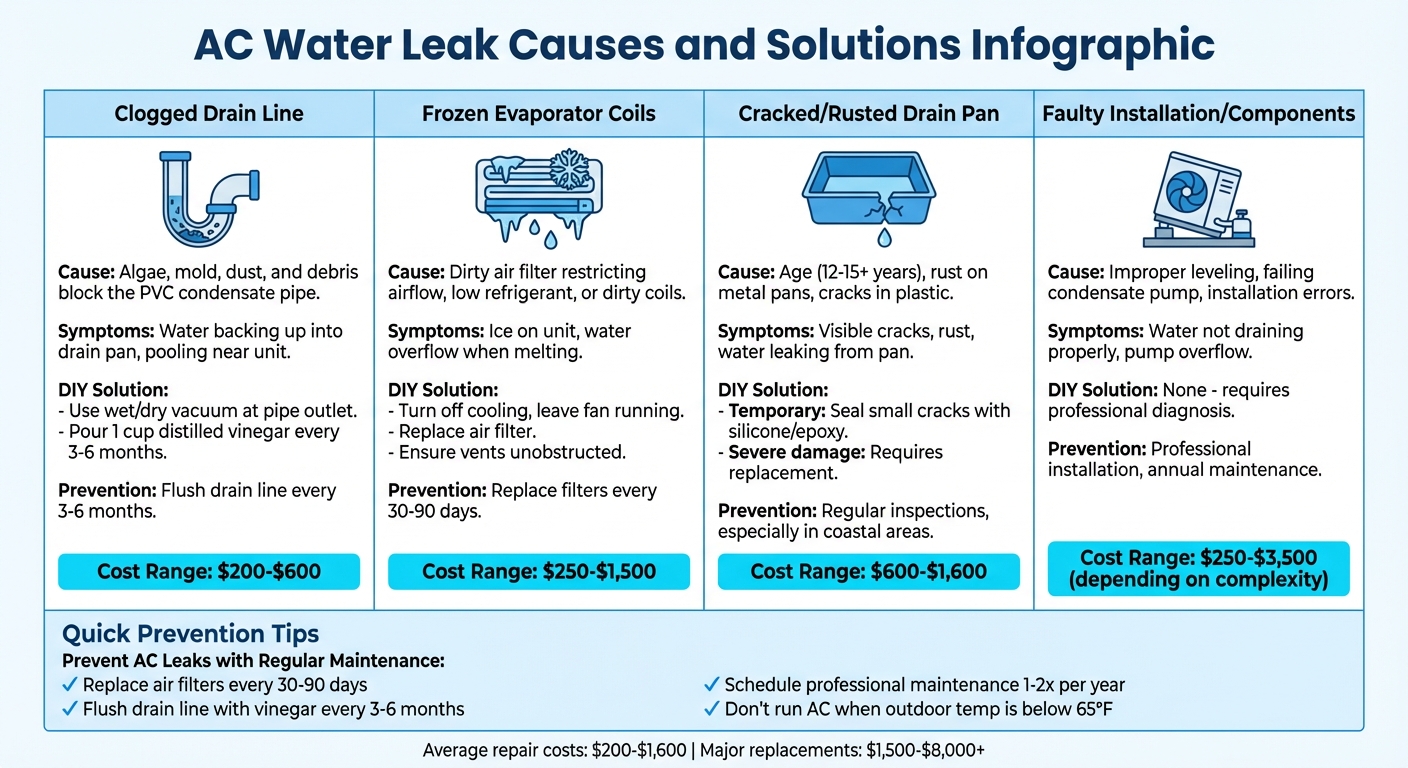
Common AC Water Leak Causes, Solutions, and Repair Costs
AC Leaking Water? Do This First!
sbb-itb-ab7d5a1
What Causes AC Water Leaks
AC water leaks can stem from several common issues, and addressing them promptly can save you from expensive repairs.
Blocked Condensate Drain Line
A clogged condensate drain line is the leading cause of indoor AC water leaks. Over time, substances like algae, mold, dust, and debris can build up inside the PVC pipe responsible for draining condensation. When this pipe gets blocked, water backs up into the drain pan and eventually spills onto your floor. To clear the blockage, use a wet/dry vacuum at the pipe's outlet and run it for a few minutes. For prevention, pour a cup of distilled vinegar into the drain line every few months to help stop algae growth.
Frozen Evaporator Coils
Frozen evaporator coils can also lead to water leaks when the ice melts faster than the drain pan can handle. The most frequent cause is a dirty air filter that restricts airflow, but low refrigerant levels or dirty coils can also contribute. To prevent this, replace your air filter every 30–90 days to maintain proper airflow. If you spot ice on your unit, turn off the cooling function but leave the fan running to safely melt the ice. Also, make sure your vents are unobstructed, as blocked airflow can worsen the problem.
Cracked or Rusted Drain Pan
Drain pans, especially in systems that are 12 to 15 years old, can develop cracks or rust over time. Metal pans are prone to rusting, while plastic ones may crack. Inspect your drain pan for visible damage. Small cracks in plastic pans can sometimes be temporarily sealed with silicone or epoxy, but if the damage is severe, a replacement will likely be necessary.
Installation Problems and Faulty Components
Even with a clear drain line, mechanical or installation issues can cause leaks. A faulty condensate pump, for instance, may fail to remove water, causing the reservoir to overflow. Additionally, if your unit isn't installed on a level surface, water may not drain correctly. Many newer systems come equipped with a float switch that shuts off the AC if water backs up, preventing flooding. If you suspect installation errors or a failing pump, it's best to call a professional for a proper diagnosis and repair. Regular maintenance can help catch these issues early, as discussed in the next section.
How to Prevent Water Leaks in Your AC
Keep Up with Regular Maintenance
Routine maintenance is key to avoiding water leaks in your AC system. Start by replacing your air filters as recommended - typically once a month if you have pets or allergies. Clean filters ensure proper airflow and help prevent frozen evaporator coils, which are a common cause of leaks.
Don't neglect the condensate drain line either. Flushing it with a cup of white vinegar every three to six months can prevent algae and mold from clogging the line. You can also use a wet/dry vacuum to clear debris from the drain line's outlet. Regularly inspect your drain pan for signs of rust, cracks, or standing water, which could indicate a problem.
Professional tune-ups are another crucial step. Schedule one at least once a year, ideally before the summer months when your AC is working its hardest. In areas with high humidity, like Florida, where AC systems run nearly all year, consider scheduling maintenance twice a year. During these tune-ups, a technician can check components like the condensate pump and refrigerant levels - tasks that are better handled by a professional.
Watch for Early Warning Signs
In addition to maintenance, keeping an eye out for early warning signs can save you from expensive repairs, which typically range between $200 and $1,600. Look for water pooling near your indoor unit, musty smells around vents, or water stains on walls and ceilings.
Changes in your AC's performance can also signal trouble. Reduced airflow, warm air when cooling mode is on, or frost forming on the evaporator coils are all red flags. Unusual noises, such as hissing, bubbling, or the sound of running water inside the system, warrant immediate attention. If you notice these signs, turn off your AC and investigate further. Additionally, avoid running your air conditioner when outdoor temperatures dip below 65°F, as this can freeze the coils and lead to leaks.
When to Call West Florida Air for Help

Leaks That Won't Stop
If you notice water pooling around your indoor AC unit, it’s a sign to bring in a professional. Persistent leaks might point to cracked internal parts, severe blockages, or even improper installation. To reduce the risk of electrical hazards or water damage, turn off your AC at both the thermostat and the breaker. Another red flag? Water dripping from the secondary drain line - usually a PVC pipe located outside near a window. This often signals that your main drain line is clogged, which could lead to indoor flooding if ignored.
Refrigerant Issues
Even with clear drain lines, ongoing leaks can stem from refrigerant problems. Handling refrigerants is not only hazardous but also legally restricted to certified technicians. Low refrigerant levels can cause the evaporator coil to freeze, and as the ice melts, the resulting water may overflow the drain pan. Keep an eye out for warning signs such as hissing noises near refrigerant lines, oily residue around connections, or warm air blowing from your system. Simply recharging the refrigerant without addressing the leak is a short-term fix that can become expensive. Certified technicians use advanced tools to locate and resolve these issues effectively.
Component Repair or Replacement
Sometimes, the problem goes beyond drainage or refrigerant. AC units over 12 years old are prone to rusted or cracked drain pans, especially in Florida’s coastal areas where salty air speeds up corrosion. Regular inspections are critical in such environments. If your system has leaked since installation, it might not be properly leveled, allowing water to bypass the drainage system entirely. More complex issues, like condensate pump failures or deeply clogged drain lines, also require professional expertise. Repair costs can vary widely: minor fixes typically range from $250 to $600, moderate repairs fall between $600 and $1,500, and major projects can cost anywhere from $1,500 to $3,500.
Why Choose West Florida Air
West Florida Air, a veteran-owned company, proudly serves Pasco, Pinellas, and Hernando counties with 24/7 emergency repair services and same-day appointments. Founded by Ryan Ferguson, the company emphasizes a customer-first approach. Their team understands the demands of Florida’s climate, where AC systems often run year-round, requiring maintenance as often as twice a year. To make repairs more affordable, they offer financing options, including 0% APR promotions and flexible payment plans ranging from 12 to 60 months. Whether you’re dealing with a minor leak or need a full system replacement - which can cost $3,500 to $8,000 or more - their certified technicians have the skills and equipment to get the job done right the first time. For any AC issues beyond routine maintenance, West Florida Air is a trusted local expert you can count on.
Conclusion
Air conditioner leaks can wreak havoc on your home - damaging floors, walls, and ceilings while contributing to mold growth and musty odors. Beyond that, leaks force your system to work harder, which can shorten its lifespan and even lead to breakdowns over time. The good news? Most of these issues can be avoided with routine maintenance.
However, when regular upkeep no longer solves the problem, it’s time to bring in the experts. Some issues, like refrigerant leaks, rusted drain pans, or malfunctioning condensate pumps, require professional attention. Attempting DIY fixes for these can lead to more harm than good. Licensed professionals have the tools and expertise to handle these repairs, which typically range between $200 and $1,600 - a small price compared to the cost of repairing extensive water damage.
If you’re noticing persistent leaks, warm air blowing from your vents, or signs of refrigerant problems, West Florida Air is here to help. Their certified technicians are available 24/7 to assist residents in Pasco, Pinellas, and Hernando counties. With emergency services and flexible financing options, they’re ready to tackle small leaks before they turn into major headaches. Reach out to West Florida Air today for fast, reliable service.
FAQs
Is an AC water leak dangerous?
A little water dripping from your air conditioner isn't usually something to worry about - it’s often just condensation. But when the leak becomes excessive or doesn’t stop, it can lead to bigger problems like water damage, mold, or even electrical issues. Some common culprits behind these leaks include clogged drain lines, cracked drain pans, or improper installation. While small leaks might not be a big deal, persistent or heavy ones should be checked out by a professional to avoid more serious complications.
How can I tell where the AC leak is coming from?
To pinpoint the cause of an AC leak, start by examining the drain line for any blockages or mold buildup, as these are frequent issues. Check the drain pan for standing water, which could signal a problem with drainage. Also, inspect the evaporator coil for signs of ice or frost; when this melts, it can lead to leaks. If you notice water collecting beneath the unit, it might be due to a clogged drain line, a frozen coil, or a damaged drain pan.
Will a leaking AC stop cooling my home?
A leaking AC can lose its ability to cool properly if the refrigerant levels drop too low or critical components are affected. That said, a small amount of condensation is completely normal and usually doesn’t interfere with performance. However, if the leak persists or cooling efficiency noticeably drops, it’s important to tackle the problem quickly to avoid more serious damage.