
How Much Does AC Replacement Cost in Florida?
Replacing an AC system in Florida costs between $6,000 and $18,000 in 2026, depending on factors like system size, energy efficiency, and installation complexity. Most homeowners spend $7,000 to $10,000 for a mid-range system with 16-17 SEER2 efficiency. High-efficiency systems (18 SEER2 or more) can exceed $14,000 but offer long-term energy savings.
Key cost factors include:
- Home size and system tonnage: Larger homes need higher tonnage systems, ranging from $5,000 to $18,000 installed.
- Energy efficiency (SEER2 ratings): Upgrading to 16+ SEER2 systems can reduce cooling costs by 30%-40%.
- System type: Central AC is the most common, while ductless systems and heat pumps cost more upfront.
- Additional costs: Ductwork upgrades ($3,000–$6,000), permits ($50–$750), and electrical work ($200–$1,000) may apply.
Save money by replacing your AC during off-peak seasons (spring/fall), upgrading to high-SEER2 systems for rebates, and ensuring proper system sizing with a Manual J calculation. Flexible financing options, like 0% APR or monthly payment plans, can make the investment more manageable.
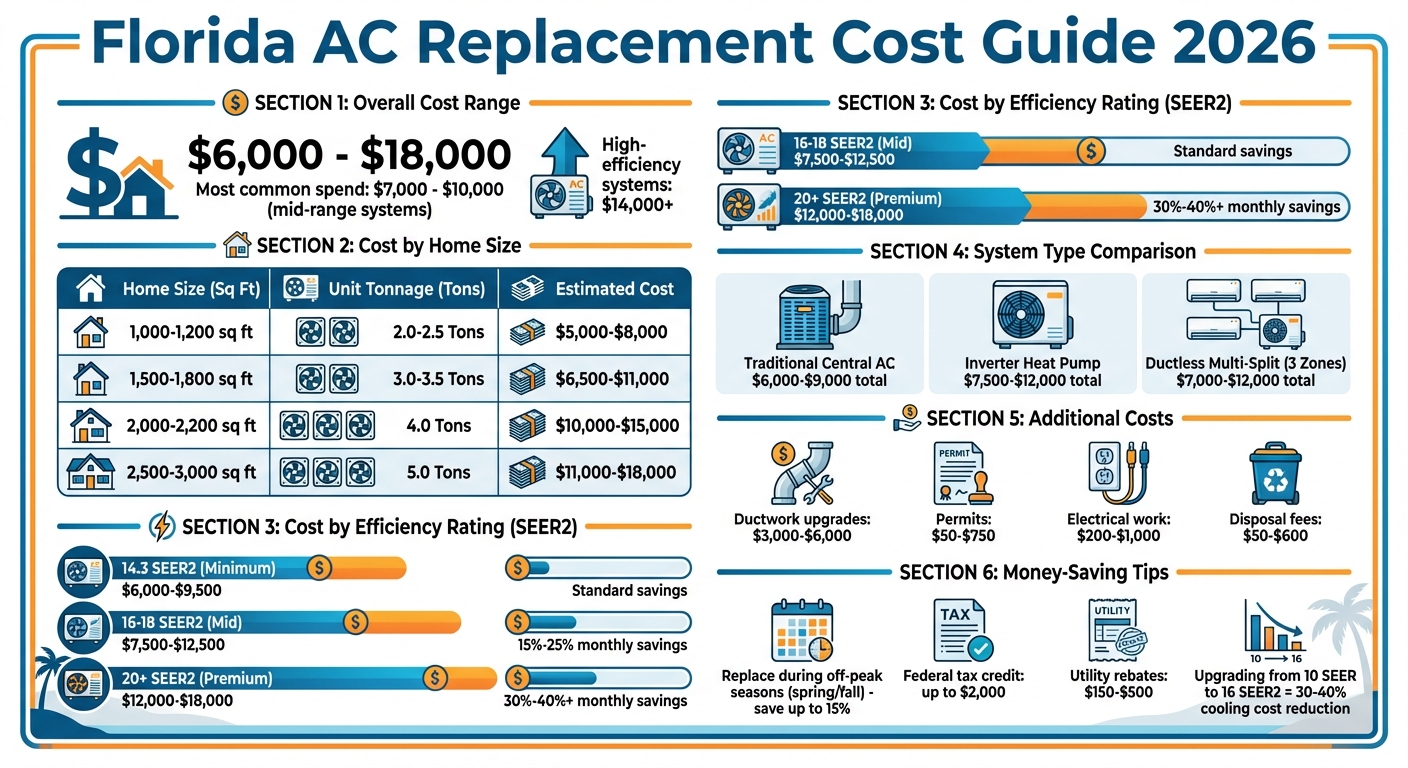
AC Replacement Cost Breakdown by Home Size and Efficiency Rating in Florida 2026
How Much Should A New Air Conditioner Cost?
sbb-itb-ab7d5a1
What AC Replacement Costs in Florida
In 2026, Florida homeowners generally spend between $5,000 and $14,000 to replace their AC systems. This price range depends on factors like system size, energy efficiency ratings, and the complexity of installation. For most standard central AC replacements, costs typically fall between $6,000 and $9,000. A typical estimate includes both the equipment and the installation services.
Replacement quotes usually cover everything needed for the job: the outdoor condenser unit, indoor air handler or evaporator coil, refrigerant, and a new thermostat. They also include labor for removing the old system, reconnecting refrigerant lines, and disposal fees. Additionally, professional quotes often bundle in local permits and final code inspections.
Labor and installation make up 30% to 50% of the total cost. These tasks require skilled professionals to handle refrigerants, electrical work, and system calibration. Labor costs can vary further depending on the system's efficiency and type.
For a mid-range system with 16 to 17 SEER2 efficiency, you can expect to pay between $7,000 and $10,000. If you're considering high-efficiency inverter systems or heat pumps rated at 18 SEER2 or higher, the cost may reach $14,000 or more. For homes needing a ductless multi-split system with three zones, the typical cost ranges from $7,000 to $12,000.
What Affects Your AC Replacement Cost
Several factors, including your home's size, the system's energy efficiency, and the type of air conditioning unit, play a big role in determining the cost of replacing your AC. This is especially important in Florida, where the climate demands reliable and efficient cooling.
Home Size and System Tonnage
The size of your home directly affects the cooling capacity - measured in tons - that your AC system needs. In Florida, a general guideline is 1 ton of cooling capacity for every 500 square feet of living space. For reference, 1 ton equals 12,000 BTUs per hour.
Getting the right size is critical. If the unit is too small, it won’t cool your home effectively. If it’s too large, it will cycle on and off more frequently, which can lead to higher energy bills and poor humidity control. To ensure accurate sizing, a professional should perform a Manual J calculation, which considers factors like insulation, windows, and sun exposure.
| Home Size (Sq Ft) | Required Tonnage | Estimated Cost Range (Installed) |
|---|---|---|
| 1,000 – 1,200 | 2.0 – 2.5 Tons | $5,000 – $8,000 |
| 1,500 – 1,800 | 3.0 – 3.5 Tons | $6,500 – $11,000 |
| 2,000 – 2,200 | 4.0 Tons | $10,000 – $15,000 |
| 2,500 – 3,000 | 5.0 Tons | $11,000 – $18,000 |
While size is important, the energy efficiency of your system also has a substantial impact on costs.
SEER2 Energy Efficiency Ratings
Energy efficiency ratings, measured by SEER2 (Seasonal Energy Efficiency Ratio 2), influence both the initial cost of the system and your long-term energy savings. In Florida, the minimum standard for new AC systems is 14.3 SEER2, though some split systems require at least 15 SEER2.
Higher-efficiency systems come with a bigger upfront price tag but can save you a lot on your energy bills. For example, upgrading from a 10 SEER system to a 16 SEER2 system can cut cooling costs by 30% to 40%. Systems with ratings of 18 SEER2 or higher often feature variable-speed compressors, which improve humidity control and maintain more consistent indoor temperatures. While these systems cost more initially, they deliver significant savings over time.
| Efficiency Rating | Upfront Cost (Installed) | Monthly Savings Potential |
|---|---|---|
| 14.3 SEER2 (Minimum) | $6,000 – $9,500 | Standard |
| 16 – 18 SEER2 (Mid) | $7,500 – $12,500 | 15% – 25% |
| 20+ SEER2 (Premium) | $12,000 – $18,000 | 30% – 40%+ |
Once you’ve considered energy efficiency, the type of AC system you choose will further shape your costs.
AC System Types and Their Costs
The type of air conditioning system you install also affects the overall cost. Central air conditioning is the most common choice for Florida homes - used in about 90% of households - and is usually the most affordable option if you already have ductwork in place.
Heat pumps, which provide both heating and cooling, are another option. They’re particularly useful in Florida’s mild winters but tend to cost more upfront. For homes without ductwork, ductless multi-split systems are a good alternative, though they can be pricier if you need full-home coverage. Additionally, systems using newer refrigerants like R-32 or R-454B typically cost 10% to 20% more than those using older refrigerants like R-410A.
| System Type | Unit Cost | Labor & Install | Total Estimate |
|---|---|---|---|
| Traditional Central AC | $3,500 – $5,000 | $2,500 – $4,000 | $6,000 – $9,000 |
| Inverter Heat Pump | $4,500 – $7,000 | $3,000 – $5,000 | $7,500 – $12,000 |
| Ductless Multi-Split (3 Zones) | $5,000 – $8,000 | $2,000 – $4,000 | $7,000 – $12,000 |
Extra Costs to Expect
When planning for an HVAC installation or replacement, it’s important to account for additional expenses beyond equipment and labor. Costs like ductwork updates, permits, and electrical upgrades can quickly add up, potentially increasing your total bill by hundreds or even thousands of dollars. Being aware of these factors can help you budget more effectively.
Ductwork Changes or Upgrades
Faulty or outdated ductwork - whether leaky, crushed, or improperly sized - can significantly affect your system’s efficiency. In fact, upgrading your ducts can improve HVAC performance by as much as 20%–30%. For older homes in Florida or those without central air, installing new ductwork can cost between $3,000 and $6,000. If only partial updates are needed, such as sealing leaks, balancing airflow, or replacing damaged sections, expect to spend $400 to $2,000.
"Quality ductwork will increase the efficiency of your HVAC, sometimes by 20% to 30%. This is because there is reduced air leakage due to better insulation and more optimized airflow." - Yashar Mosaferi, President of Klondike AC
How can you tell if your ducts need attention? Look for temperature differences of 5 degrees or more between rooms or listen for whistling sounds from your vents. A static pressure test or room-by-room airflow diagnostic can confirm whether updates are necessary. Investing in ductwork improvements not only enhances system efficiency but also reduces long-term energy costs.
Permits, Disposal Fees, and Electrical Work
In Florida, permits are required for most AC replacements to ensure compliance with local building codes. Permit fees typically range from $50 to $750, with coastal areas like Pinellas often incurring higher costs due to stricter hurricane-strapping requirements and more complex inspections.
Disposal and delivery fees for removing old units and recycling refrigerant can add another $50 to $600 to your bill. Additionally, modern refrigerant standards might require flushing or replacing copper line sets, costing $300 to $750. High-efficiency systems may also necessitate electrical upgrades, such as larger breakers or updated wiring, which generally cost $200 to $1,000. If your project involves rooftop or multi-story installations requiring a crane, you could face an extra $400 to $1,200.
To cover unexpected expenses like electrical updates or duct repairs, it’s wise to set aside a contingency budget of $200 to $2,000. These potential costs highlight the importance of thorough planning to ensure your new system operates efficiently and complies with all regulations.
Financing Options with West Florida Air
Replacing an AC system can be a significant expense, with costs in Florida ranging from $4,500 to $12,000. To make this more manageable, West Florida Air teams up with Service Finance Company, LLC, a licensed sales finance company, to offer flexible financing solutions. The process is simple, with an online application that typically provides a credit decision in just 15 minutes. This eliminates the need to delay your AC installation due to upfront costs.
Monthly Payment Plans
West Florida Air provides monthly payment plans with terms ranging from 12 to 60 months. This flexibility allows you to spread the cost of a new AC system over time instead of paying the full amount upfront. For instance, a $7,000 system can be financed over 48 months, making the payments much more manageable. Plus, the quick approval process ensures you can address urgent cooling needs without unnecessary delays.
0% APR Promotions
For eligible customers, West Florida Air also offers promotional financing options, such as 0% APR and no payments for up to 6 months. These deals can help you avoid interest charges and may even make you eligible for utility rebates worth $150 to $500. It’s a great way to save while upgrading your cooling system.
Credit Card Payments
If you prefer to use your existing credit lines, West Florida Air accepts all major credit cards, including Visa, Mastercard, Discover, and American Express. This option is ideal for those looking to earn rewards or take advantage of their credit card benefits. Regardless of the payment method you choose, West Florida Air prioritizes transparency and avoids high-pressure sales tactics, as reflected in their impressive 5.0/5-star rating from over 100 Google reviews.
Keep in mind that all financing options are subject to credit approval.
How to Save Money on AC Replacement
Making informed choices about your AC replacement can help you save thousands over the system's lifespan while keeping your home comfortable.
Get the Right System Size
Choosing the correct size for your AC unit is critical. An oversized unit may cool your home quickly but will short-cycle, leading to poor humidity control.
"In Florida, humidity is as big a factor as heat. Be wary of installing a unit that is too large rather than too small, as it will short-cycle frequently, leaving your home feeling cool but clammy." – One Way Air
To avoid these issues, ask for a professional Manual J load calculation. This ensures the system is sized correctly for your home. As a general rule, modern homes require about 1 ton of cooling capacity for every 500–600 square feet.
Once you’ve nailed down the right size, consider upgrading to a high-efficiency system to take advantage of rebates and long-term energy savings.
Buy High-SEER2 Systems for Rebates
Investing in a high-efficiency AC system not only lowers your energy bills but also opens the door to federal and utility incentives. For example, homeowners can claim a 30% federal tax credit - up to $2,000 - for qualifying heat pumps. Additionally, providers like FPL offer cash-back incentives ranging from $150 to $500.
An upgrade from an older 10 SEER unit to a 16 SEER2 model can cut cooling energy use by about 38%, significantly reducing annual energy costs. Over a 15-year period, these savings can help offset the higher upfront cost of a more efficient system.
Beyond selecting the right equipment, timing your replacement can also lead to major savings.
Replace During Off-Peak Seasons
Plan your AC replacement for off-peak times, like spring or fall, when contractor demand is lower. During these shoulder seasons, you’ll likely benefit from quicker service, better labor availability, and discounts of up to 15% compared to peak summer rates.
Additionally, as the industry transitions to newer refrigerants, warehouses in 2026 have been discounting older R-410A systems by 20% or more. Replacing your system during these periods not only saves money but also gives you time to compare bids and negotiate terms without the stress of a mid-summer breakdown.
Conclusion
Florida homeowners should budget between $6,000 and $18,000 for an AC replacement, with the final cost influenced by factors like system size, energy efficiency, and installation specifics. To get the most out of your investment, it's smart to plan ahead. A Manual J load calculation helps determine the right system size, while opting for high-efficiency systems rated 16 SEER2 or higher can cut cooling costs by 20–30%. Plus, these systems may qualify for federal tax credits up to $2,000 and utility rebates ranging from $150 to $500. Scheduling replacements during spring or fall - when demand is lower - can also reduce labor costs.
Florida's climate adds unique challenges for AC systems. The combination of intense heat, high humidity, and salt-air exposure means units often work harder and have a shorter lifespan, typically lasting 10 to 14 years. For homeowners in Pasco, Pinellas, and Hernando counties, West Florida Air is equipped to tackle these challenges. They offer flexible financing options, including monthly payment plans from 12 to 60 months, 0% APR promotions for eligible homeowners, and acceptance of major credit cards. As a veteran-owned business, they provide detailed, upfront quotes that cover all costs - including permits, disposal, and electrical work - so there are no surprises.
With experienced professionals handling installation, you can trust that your new system will be energy-efficient, properly sized, and built to last. Contact West Florida Air for expert advice tailored to your home's cooling needs and budget.
FAQs
What size AC do I need for my home?
The size of the AC you need hinges on your home's specific cooling needs. These needs are shaped by several factors, including the square footage of your space, the quality of insulation, and the climate in your area. To get the best efficiency and performance, it's crucial to have a professional evaluate these factors and recommend the right unit for your home.
Do I need new ductwork with my new AC?
If your current ductwork is in good condition - adequately sized, sealed, and insulated - you probably won’t need to replace it. However, if the ducts are too small, leaky, or lack proper insulation, repairs or upgrades might be necessary, which could add to your total expenses. It’s a smart move to have your ductwork inspected to confirm it works well with your new AC system and is set up for maximum efficiency.
How much will a higher SEER2 unit save me?
Choosing a higher SEER2-rated unit can lead to noticeable savings on your energy bills over time. In Florida, where air conditioning is a must for much of the year, units with a SEER rating of 16 or above are a smart investment. Not only do they often qualify for rebates, but their improved energy efficiency also helps cut down on long-term operating costs. Over time, these savings can make a big difference, especially in Florida's consistently warm climate.