
How Zoned HVAC Systems Save Energy
Zoned HVAC systems reduce energy use by tailoring heating and cooling to specific areas of your home, rather than conditioning the entire space at once. This setup uses motorized dampers and multiple thermostats to direct airflow only where needed, cutting energy costs by up to 30%–35%. It’s especially effective for homes in warm climates like Florida, where cooling demands vary by room and time of day.
Key Benefits:
- Energy Savings: Only cool or heat occupied spaces.
- Improved Comfort: Eliminate hot and cold spots in your home.
- Lower System Strain: Reduce wear and extend HVAC lifespan.
- Custom Control: Set different temperatures for different zones.
Zoned systems work with both ducted and ductless setups, making them flexible for various home designs. While installation costs range from $2,000–$7,000, the long-term savings on energy bills and reduced maintenance needs make it a worthwhile investment. Proper installation and regular maintenance are critical to ensure efficiency and avoid issues like static pressure buildup.
If you’re considering a zoned HVAC system, ensure your home layout and HVAC unit are compatible. For Florida homeowners, companies like West Florida Air specialize in these systems, offering tailored solutions for the region’s unique cooling challenges.
Pros and Cons of HVAC Zoning Do you need it? Basic zoning systems explained. Honeywell etc.

How Zoned HVAC Systems Save Energy
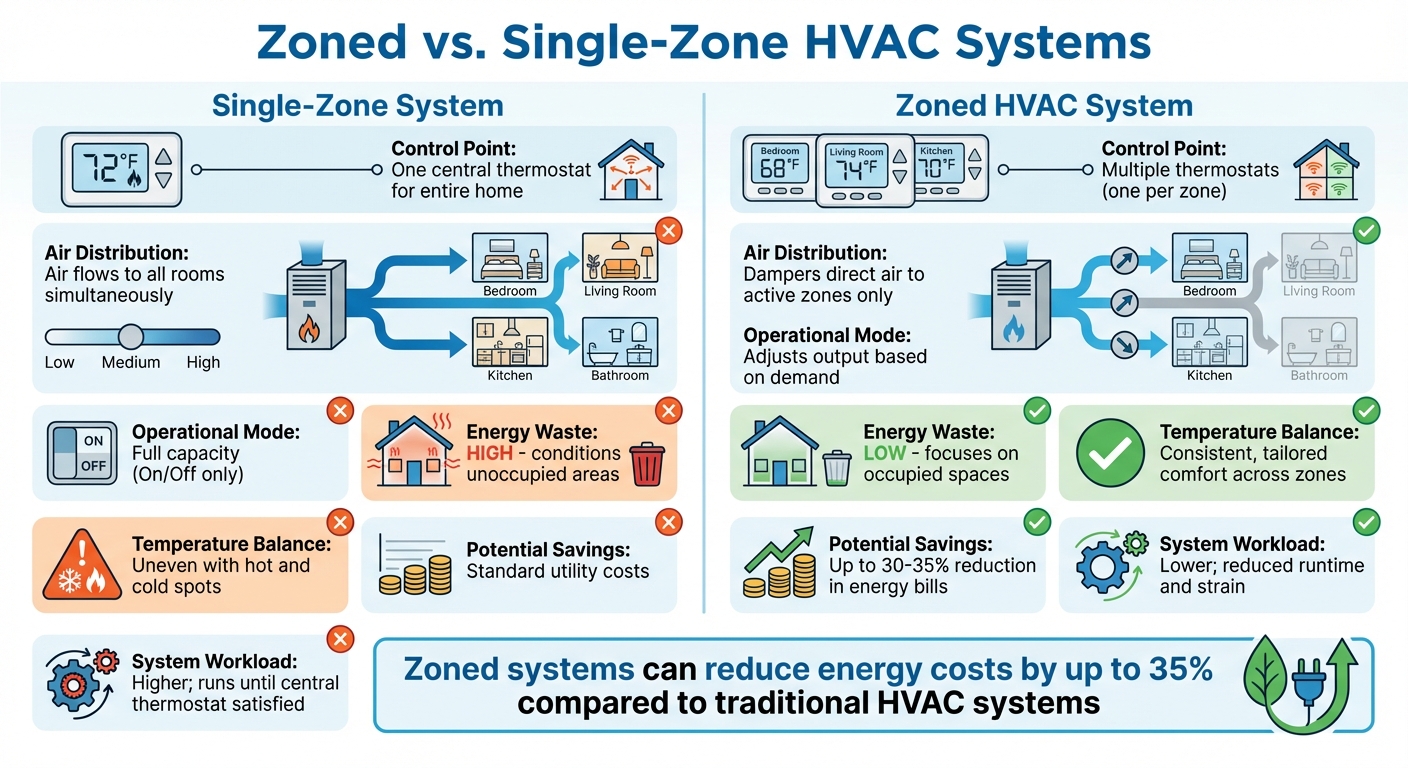
Zoned vs Single-Zone HVAC Systems: Energy Efficiency Comparison
Reducing Energy Waste with Targeted Conditioning
Zoned HVAC systems are designed to deliver conditioned air exactly where it's needed, avoiding unnecessary energy use. Here's how it works: motorized dampers, managed by a central control panel, respond to signals from individual thermostats in each zone. When a specific zone reaches its desired temperature, the dampers close, stopping airflow to that area while other zones continue to receive air until they reach their set temperatures.
This method, combined with variable-speed units that adjust output based on demand, ensures energy isn't wasted on unoccupied spaces. For instance, if you're working in your home office and only that room needs cooling, the system operates at a lower capacity - much like how dimmer switches reduce electricity use for lights.
"Think of it like the light switches in your home; you wouldn't use one switch to turn on every light in the house. Zoning applies that same logic to your heating and cooling." – Travis Baugh, Digital Brand Marketing Manager, Bryant
This targeted approach not only saves energy but also translates into noticeable cost reductions.
Energy Savings Backed by Data
Studies reveal that zoning can reduce energy usage and costs by as much as 35% compared to traditional HVAC systems. These savings stem from focusing on occupied spaces - like living rooms during the day and bedrooms at night - rather than maintaining the same temperature across the entire home.
Zoning also decreases the strain on your HVAC system by reducing its workload. This lighter demand can extend the system's lifespan and lower the frequency of repairs, adding to long-term savings. With over 50 years of proven use, zone damper systems have demonstrated their reliability and efficiency.
Comparison: Zoned HVAC Systems vs. Single-Zone Systems
| Feature | Single-Zone System | Zoned HVAC System |
|---|---|---|
| Control Point | One central thermostat for the entire home | Multiple thermostats (one per zone) |
| Air Distribution | Air flows to all rooms simultaneously | Dampers direct air to active zones only |
| Operational Mode | Typically operates at full capacity ("On" or "Off") | Adjusts output based on demand |
| Energy Waste | High - conditions unoccupied areas | Low - focuses on occupied spaces |
| Temperature Balance | Often uneven, with hot and cold spots | Consistent, tailored comfort across zones |
| Potential Savings | Standard utility costs | Up to 30%–35% reduction in energy bills |
| System Workload | Higher; runs until the central thermostat is satisfied | Lower; reduced runtime and strain |
For multi-story homes, the advantages are even more pronounced. Zoned systems allow separate temperature control for each floor, eliminating the need to overcool or overheat the entire house just to make one level comfortable.
Key Components of an Energy-Efficient Zoned HVAC System
Thermostats and Controls
In a zoned HVAC system, each zone is equipped with its own thermostat. These thermostats communicate with a central control panel, which manages the operation of dampers and the HVAC system itself. With the rise of smart thermostats, homeowners can now make remote adjustments, potentially cutting energy usage by up to 35%. Most residential systems can handle between 2 and 8 zones, offering flexibility for various home layouts.
This level of control seamlessly ties into the role of motorized dampers in directing airflow.
Motorized Dampers in Ducts
Motorized dampers, installed within the ductwork, are key to ensuring conditioned air only reaches the zones that need it. When a zone's thermostat signals for heating or cooling, the dampers for that zone open, while those in other zones remain closed. This prevents energy waste by stopping air from flowing into areas that are already at the desired temperature.
These dampers adjust dynamically throughout the day as temperatures fluctuate. Some systems also include bypass dampers, which help manage static pressure by redirecting excess air when multiple dampers are closed.
Achieving efficient airflow also depends on pairing the system with the right HVAC equipment.
HVAC System Compatibility
The type of HVAC unit plays a critical role in the efficiency of a zoned system. Variable-speed and multi-stage units are ideal because they can modulate their output to align with the specific heating or cooling demands of a single zone. In contrast, traditional single-stage systems, which always run at full capacity, often require bypass ducts and can suffer from increased wear on components like the air handler.
Heat pumps are another excellent option for zoned systems, as they provide both heating and cooling in one unit. When designing zones, it's essential that the smallest zone accounts for at least 30% to 35% of the system's total capacity. This ensures the equipment operates effectively and avoids unnecessary strain. If you're working with an older single-stage system, it might be worth waiting to upgrade to a variable-speed unit before adding zones, as this combination offers the best balance of energy efficiency and durability.
sbb-itb-ab7d5a1
Installation Process for Zoned HVAC Systems
Assessing Home Layout and Zones
Before starting, a licensed technician evaluates your home's layout to determine the best way to divide it into zones. They consider factors like multi-level designs, high ceilings, areas with lots of sun exposure, and how different spaces are used during the day and night. Homes with rooms that can be closed off are typically better suited for zoning than open floor plans, where air flows more freely. During this assessment, the technician also inspects your current ductwork to check if it’s compatible with dampers and ensures your HVAC system can handle the air pressure changes zoning requires. For homes under 2,000 square feet, a single-zone system might be enough, but larger homes almost always benefit from having multiple zones.
Once the zones are defined, the installation moves forward with integrating the necessary components.
Installing Dampers and Thermostats
The next step involves adding motorized dampers and thermostats based on the earlier zone specifications. Motorized dampers are installed in your existing ductwork to control airflow by opening or closing access to each zone. Low-voltage wiring is run to connect these dampers and thermostats to a central control panel. Each zone gets its own thermostat, which is carefully placed away from direct sunlight, windows, or heating registers to ensure accurate readings. To handle excess air pressure, bypass dampers are also installed. Technicians seal duct joints with mastic or foil-backed tape to prevent air leaks. For most homes, this installation process takes between 1 and 3 days to complete.
System Integration and Testing
After the components are in place, the final stage involves connecting everything to your existing HVAC system through a zone control panel, which acts as the system's "brain." Technicians perform load calculations to ensure your HVAC unit can handle the static pressure changes introduced by zoning. They also test each zone to confirm proper airflow, accurate temperature control, and that the dampers respond correctly to thermostat signals. If your HVAC system is an older single-speed model, additional bypass ductwork might be needed to prevent short-cycling, which occurs when the system turns on and off too frequently. This final testing ensures everything works as it should and ties back to earlier discussions about energy efficiency.
Maintaining Your Zoned HVAC System for Long-Term Savings
Regular Maintenance for Key Components
Keeping your zoned HVAC system in top condition is key to ensuring it runs efficiently and saves energy. Start by checking and replacing air filters every 30 days if they’re dirty. This simple step prevents your system from overworking, which can drive up energy costs. Make sure the filters fit snugly in the air handler to avoid bypass airflow issues.
Pay close attention to motorized dampers, ensuring they move properly to avoid heating or cooling areas that aren’t in use. It’s also important to keep vents and registers fully open and free from obstructions like furniture or curtains to maintain proper airflow. Inspect any accessible ductwork for leaks - air loss through leaks can reach up to 30%. Seal any gaps using mastic sealant or metal tape to prevent this waste.
| Maintenance Task | Frequency | Primary Benefit |
|---|---|---|
| Air Filter Inspection | Monthly | Reduces equipment strain and lowers energy costs |
| Duct Leak Inspection | Annually | Prevents 20–30% air loss and enhances comfort |
| Thermostat Battery Check | Annually | Ensures reliable communication with the system |
| Vent/Register Cleaning | Regularly | Promotes balanced airflow across all zones |
In addition to these routine checks, scheduling a yearly professional inspection is essential for keeping your system running smoothly.
Annual Professional Tune-Ups
Annual tune-ups by a professional technician are a perfect complement to your regular maintenance efforts. Plan these inspections at least once a year, ideally during spring, before Florida’s intense cooling season begins. During these visits, technicians will inspect electrical components, check refrigerant levels, clean drainage lines, and thoroughly clean the evaporator and condenser coils. Dirty coils can severely impact your system’s ability to cool your home efficiently.
Given Florida’s humid climate, professionals should also check evaporator coils and condensate drain lines for mold growth or potential water damage. Routine professional maintenance can catch small issues - like refrigerant leaks or misaligned fans - before they escalate into expensive repairs. Technicians will also ensure motorized dampers are responding properly to thermostat signals.
With regular professional care, your HVAC system can last longer and maintain the energy savings that zoning offers, which can cut energy costs by as much as 30%. This upkeep not only keeps your system operating at peak efficiency but also helps you avoid unnecessary expenses down the line.
West Florida Air Conditioning & Heating Inc. provides thorough tune-up services across Pasco, Pinellas, and Hernando counties, ensuring your system runs at its best for years to come.
Conclusion
Zoned HVAC systems are an efficient way to save energy by focusing on conditioning only the spaces that are in use. By cutting run times by 25%–35%, they can reduce utility bills by as much as 30%. These numbers back up earlier research about minimizing energy waste.
Beyond energy savings, they also solve the problem of uneven temperatures, eliminating hot and cold spots for better comfort. This is especially useful in Florida homes, where multi-story designs, large windows, or sunrooms can trap heat during the summer.
Financially, the benefits are hard to ignore. While the initial investment ranges from $2,000–$7,000, the monthly energy savings, lower maintenance needs, and extended equipment lifespan - up to 15 to 25 years with proper care - make it a smart long-term choice. However, proper installation is key to reaping these rewards. Poor installation can increase static pressure, damage equipment, and reduce efficiency. Chris Houchin, Co-owner of The Weather Changers, emphasizes this point:
"If two zones are closed and one is open, it's perfect. You open all three zones, it is massively undersized, it is not going to heat or cool the whole house. As long as you get a properly sized system, they can be incredible".
West Florida Air Conditioning & Heating Inc. specializes in professional installation and maintenance of zoned HVAC systems across Pasco, Pinellas, and Hernando counties. Their veteran-owned team ensures every system is correctly sized, installed, and maintained to deliver the energy savings and comfort highlighted throughout this article. With their expertise, you can enjoy the full benefits of a zoned HVAC system for years to come.
FAQs
Are zoned HVAC systems more cost-effective than traditional systems?
Zoned HVAC systems offer a way to save on energy costs by focusing heating or cooling efforts only where they’re needed. While the installation typically costs around $3,000, the reduced energy consumption can translate into noticeable savings on utility bills over time, making it a worthwhile investment for many homeowners.
By allowing you to set different temperatures for specific areas, these systems help avoid wasting energy on unused spaces. The result? A balance of comfort and efficiency that appeals to those aiming to lower expenses while maintaining a cozy home environment.
What should I consider when deciding how many HVAC zones my home needs?
When figuring out how many HVAC zones your home needs, start by looking at the size and layout of your space. Larger homes or those with multiple stories often benefit from having more zones. This is especially true if you’ve noticed that upstairs areas tend to get warmer in the summer, while downstairs spaces feel cooler in the winter.
Next, think about how you use different parts of your home. For example, rooms like a home office or guest bedroom - which might have unique temperature needs or irregular use - could work better as separate zones. Other factors, like the number of windows, insulation quality, or how much sunlight certain rooms get, can also cause temperature differences that zoning can help balance.
Finally, it’s a good idea to bring in an HVAC professional to evaluate your system. They’ll check your system’s capacity and ductwork to design a zoning plan that fits your home’s specific needs. This way, you can enjoy better comfort while keeping energy use in check.
Can a zoned HVAC system work with smart home technology to improve energy efficiency?
Zoned HVAC systems work hand-in-hand with smart home technology to make managing your home's temperature more efficient. By connecting with smart thermostats and automation systems, you can fine-tune the temperature in specific areas of your home, ensuring that energy is used only where it's needed. This means no more wasting energy heating or cooling spaces that aren't in use.
Smart technology takes it a step further by offering scheduling options and remote access. With just your smartphone or another connected device, you can adjust the settings anytime, anywhere. Together, zoning and automation provide a way to maintain a comfortable home while cutting down on energy use.